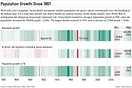
Of the 9 million people living in Switzerland, 2.5 million — about 27%— do not hold a Swiss passport (as of the end of 2024). Most of the foreign population comes from the European Union (63%), with 82%originating from European countries overall. Italy leads the list, with 342,000 residents, followed by Germany (330,000), Portugal (257,000) and France (171,000). Together, these four countries account for nearly half of all foreign nationals living in Switzerland.
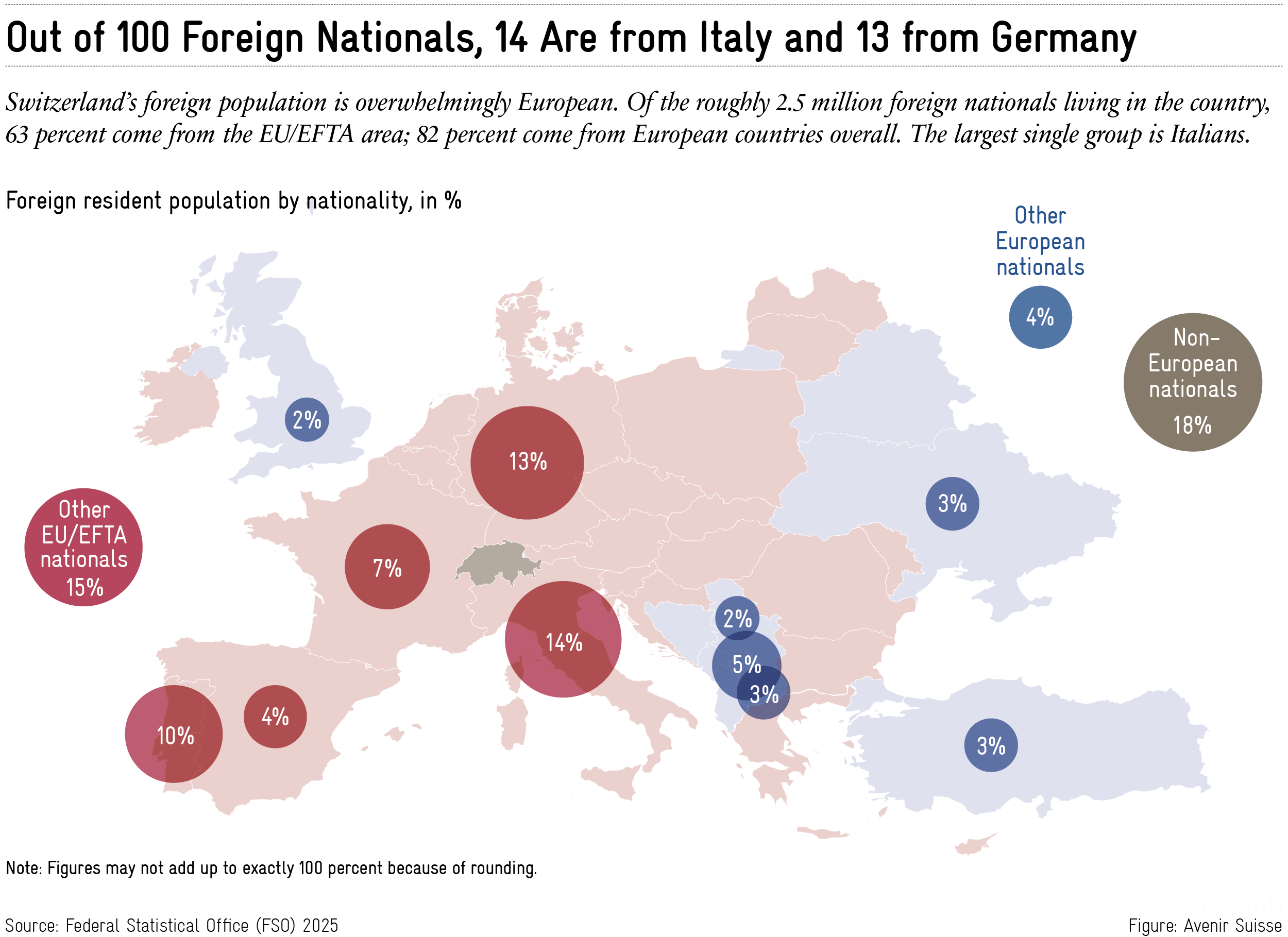
Among countries outside the EU and EFTA, the largest groups include Kosovo, Turkey and North Macedonia (European third countries) as well as Eritrea, Afghanistan and Sri Lanka (non-European third countries) — a reflection of past waves of labor migration and refugee arrivals. China and India, despite representing more than a third of the world’s population, make up less than 2%of Switzerland’s foreign population.
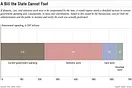
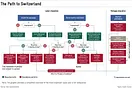
Just over half of foreign nationals living in Switzerland (56%) hold a permanent residence permit granting an unlimited right of stay. The other half hold a residence permit (typically issued for one to five years and often linked to employment) or have remained for other reasons, including diplomats and people admitted on a provisional basis.
Nearly one in five foreign nationals was born in Switzerland. These individuals increase the foreign-resident population without any immigration having taken place.
Switzerland’s population statistics are based on the country’s permanent resident population — defined as those holding a residence permit valid for at least 12 months, or who have effectively remained in the country for at least a year. People staying only briefly, or asylum seekers who have only recently arrived, are classified as part of the non-permanent foreign resident population. At the end of 2024, that group totaled 88,700 people.
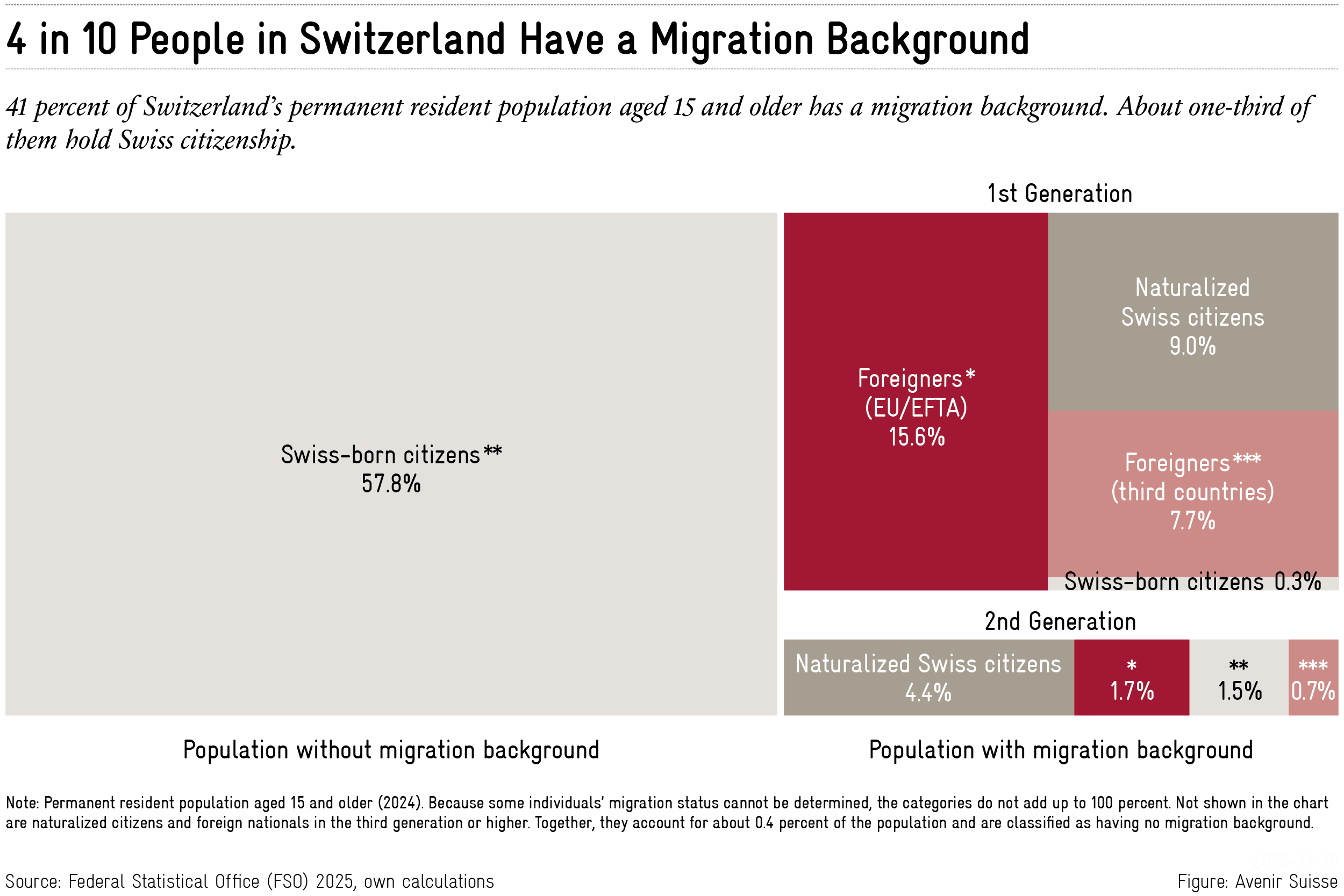
While about 2.5 million people in Switzerland do not hold a Swiss passport, many more have foreign roots. If one includes naturalized citizens, as well as Swiss-born individuals whose parents were both born abroad, 41%of the population has a migration background. That share varies widely across the country, from 18%in the canton of Appenzell Innerrhoden to 66%in the canton of Geneva.
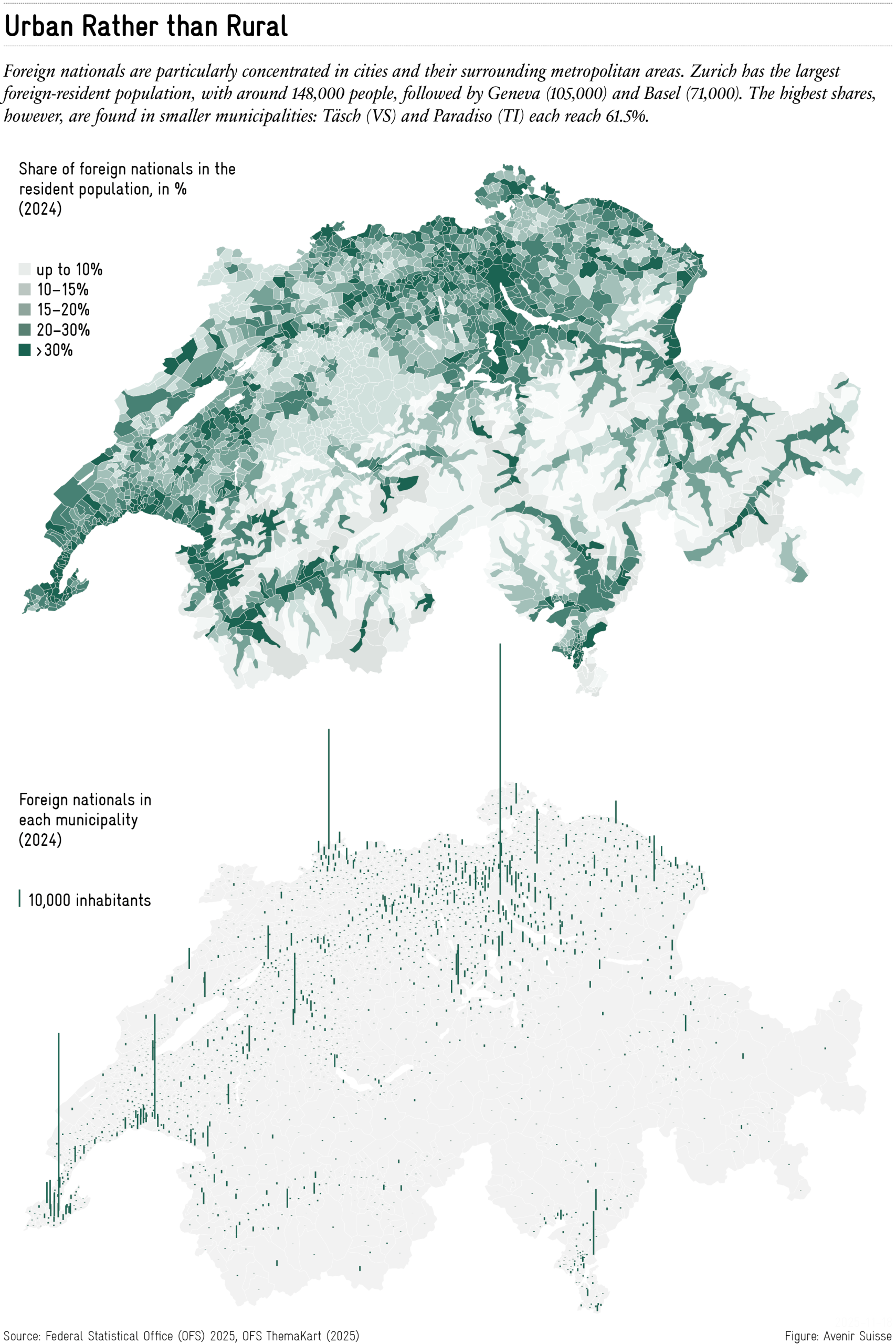
Foreign nationals in Switzerland live mainly in cities and the surrounding metropolitan areas. Their share is also above average in Western Switzerland and in tourism-driven regions. Two small municipalities top the national list: Paradiso, near Lugano, and Täsch, near Zermatt. In each, 61.5% of residents do not hold a Swiss passport. In Paradiso, the foreign population is made up largely of Italian citizens; in Täsch, it is mostly Portuguese nationals, many of whom work in the tourism industry.
In absolute numbers, the city of Zurich stands out, with 148,000 residents without Swiss citizenship — 34%of its population. By contrast, foreign nationals are relatively scarce in the rural parts of Central and Eastern Switzerland, as well as in Bern and Jura. Unsurprisingly, settlement patterns also differ by native language, with foreign communities clustering in different ways across the country’s language regions.
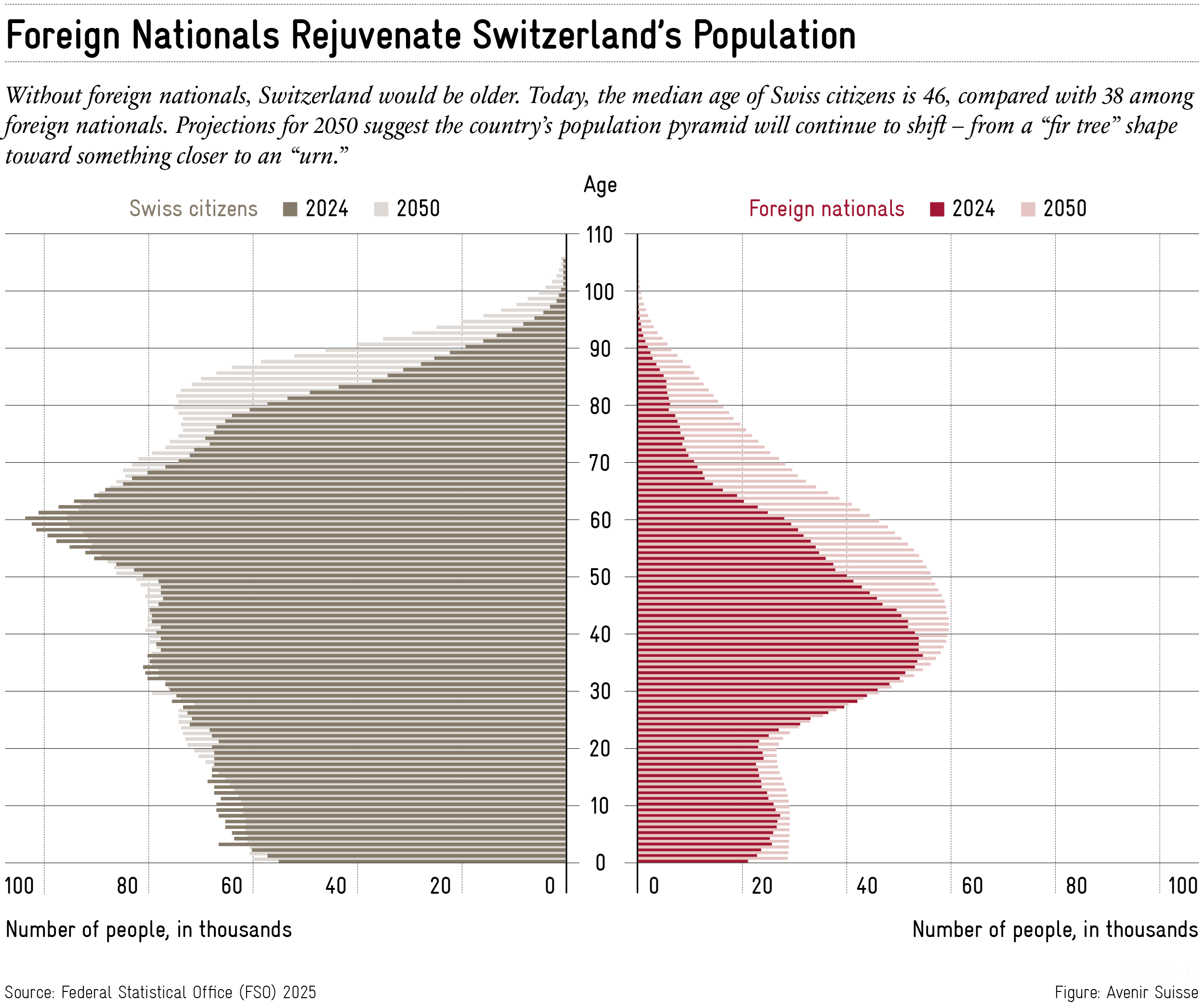
Immigration to Switzerland is largely driven by the labor market, which means that newcomers tend to be relatively young. The average age of EU and EFTA citizens at the time of arrival is 30. As a result, immigrants effectively “rejuvenate” the country’s age structure. While the Swiss population pyramid is dominated by the baby boomer generation, the foreign population is shaped above all by adults between 30 and 45. In that age bracket, foreign nationals account for around 40%of residents.
The median age in Switzerland is 46 for Swiss citizens and 38 for foreign nationals. Among Swiss residents of working age, the ratio is now four retirees for every 10 people in the labor force; among foreign nationals, it is one retiree for every 10. Foreign residents also influence demographics through fertility rates. Women without Swiss citizenship living in Switzerland have an average of 1.5 children, compared with 1.2 among Swiss women. That said, birthrates vary widely by country of origin, and they tend to converge over time toward the levels typical in Switzerland the longer families remain in the country.
Migration Insights
Migration is shaping Switzerland—politically, economically, and socially. Hardly any other topic is debated as intensely and emotionally. With its blog series on migration, Avenir Suisse sheds light on the many facets of immigration to Switzerland. We provide data and facts to foster a better understanding of Switzerland as a country of immigration.